< World >
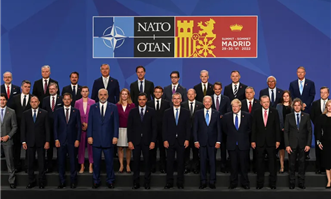
The Ukraine war, which began in 2022, became one of the most influential international conflicts of the 21st century. The war not only caused a serious humanitarian crisis but also transformed global power dynamics and the nature of international alliances. After Russia’s invasion, NATO strengthened its unity, and new countries joined Western alliances, and non-Western nations found new diplomatic strategies. The first major shift in global alliances was NATO’s expansion to Northern Europe in 2022-2023 and was formalized in 2023. Unfortunately, this also increased tensions with Russia. However, Western nations continued to strengthen their cooperation.
Western alliances are growing stronger through continuous military support and economic sanctions. Recently, Finland and Sweden officially joined NATO, breaking their decades of neutrality. According to NATO Secretary General Jens Stoltenberg (2023), “Sweden and Finland’s membership will make our Alliance stronger, with highly capable forces, an advances defence industry, and years of experience training and operating together with Allies.”
Indeed, Western nations are actively supporting Ukraine’s defense. With government support, the United States and EU are providing military equipment and humanitarian aid worth billions of dollars. NATO is the world’s most powerful military alliance responsible for collective defense among member states. As Europe decided to reduce energy dependence on Russia, the success of this cooperation will give Western nations a stronger position in global security.
The West’s unity and strategy enabled effective crisis response. According to David Cortright and George A. Lopez (2022), experts on sanctions policy, effective crisis response requires multiple tools working together. They argued that "sanctions must not simply be punitive but must be accompanied by diplomatic efforts to resolve the crisis," emphasizing the need for a comprehensive package including military, economic, and diplomatic measures.
To sum up, Western nations made efforts to strengthen their alliances and succeeded in building a united front against aggression. The continuous development of Western cooperation will provide these nations with international influence and security. Furthermore alliance politics can also cause problems such as excluding non-aligned countries and increasing tensions. So, the West needs to focus on these drawbacks and find balanced approaches. This strategy to deal with these problems will give the West not only military strength but also strong credibility and long-term stability. Through this process of cooperation and adaptation, the international community will reshape the future of global alliances.
By Staff Reporter Lee Yeonsoo (1-7)
'Opinion' 카테고리의 다른 글
| Why Hallyu is so popular in other countries (0) | 2026.02.03 |
|---|---|
| From Crowds to Culture: Rethinking Tourism in Spain (0) | 2026.02.03 |
| France’s Financial Crisis: Excessive Welfare and Tax Reductions (0) | 2026.02.03 |
| Card News on Social Media: Triggering Distortions about International Conflict (0) | 2026.02.03 |
| Beyond Cambodia’s Dream: Korea’s crisis of diplomacy and desperation (0) | 2026.02.03 |


