< Law >
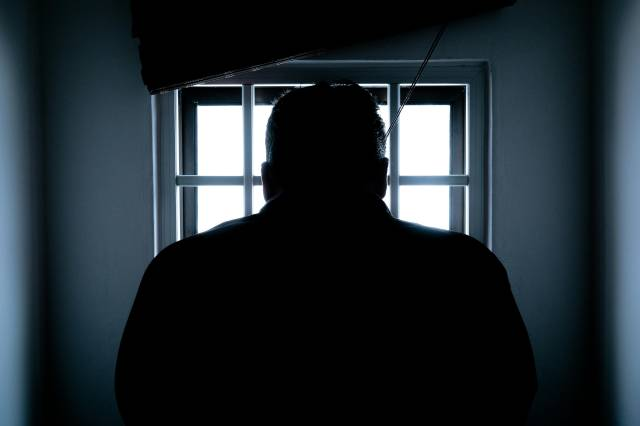
We often hear news reports about individuals who committed horrific crimes being released on parole. However, as these parolees continue to commit new crimes, public anxiety grows, reigniting discussions about introducing ‘Life Without Parole’. Life Without Parole is, as the name suggests, a punishment where inmates spend their entire lives in prison without the possibility of parole. While the government and political circles are pushing for this as part of their response to heinous crimes, voices of caution and concern regarding the introduction of this system are growing louder, not only from the Supreme Court but also within academia. Some view it as a realistic alternative to the death penalty, but we need to reconsider whether such a system truly aligns with the justice the law aims to achieve.
Violation of Human Dignity and Loss of Punishment's Purpose
First, Life Without Parole carries a high risk of conflicting with the constitutional value of human dignity. By fundamentally depriving inmates of their right to regain freedom, it may violate the essence of Article 10 of the Constitution of the Republic of Korea, which guarantees human dignity, value, and the pursuit of happiness, as well as Article 12, which guarantees freedom of the person, potentially rendering it unconstitutional. For example, in 1978, the German Federal Constitutional Court ruled that Life Without Parole was unconstitutional, determining that if the opportunity to regain freedom is not prescribed by law, it constitutes an essential violation of constitutional fundamental rights. Similarly, in 2013, the European Court of Human Rights ruled that Life Without Parole violates the European Convention on Human Rights. Furthermore, the purpose of punishment is seen as a fusion of three elements: retribution, general deterrence, and specific deterrence. However, Life Without Parole is criticized for socially and psychologically devastating inmates, making it impossible to consider the purposes of punishment—specifically deterrence and the rehabilitation of offenders. This system is viewed as a means entirely incompatible with the rehabilitative purpose of punishment, as it offers no possibility for offenders to return to society through reform.
Potential Violation of the Principle of Legality and Proportionality
Second, Life Without Parole carries a high risk of violating the principle of legality and the principle of proportionality. The Ministry of Justice's approach, which requires courts to determine the possibility of parole at the time of sentencing for Life Without Parole, may conflict with the constitutional principle of legality. By circumventing Article 41 of the Criminal Act, which defines types of punishment, and having judges determine parole eligibility, this approach risks operating ‘like a punishment’ and thus violating the principle of legality. Furthermore, the inherent difficulty in accurately determining whether harsh sentences like Life Without Parole correspond to the severity of the crime carries a significant risk of violating the principle of proportionality.
Relationship with the Death Penalty and Ethical Considerations
Third, while Life Without Parole is sometimes discussed as an alternative to the death penalty, considering the reality in our country where death sentences are handed down but not carried out, introducing it alongside the death penalty could render its rationale meaningless. If Life Without Parole is not substantially different from the death penalty, is there really a need to introduce it? Furthermore, this punishment presupposes that the inmate has no possibility of rehabilitation and implies that even if rehabilitated, they are not desired back into society. Is it not a constitutionally questionable system that violates human dignity to deprive an inmate of the opportunity to enjoy physical freedom again, keeping them isolated from society for life? Particularly from the perspective that it imposes full responsibility on the offender, deprives them of hope, and denies their human dignity and humanity, Life Without Parole can be seen as having the same nature as the death penalty. This system offers no possibility for the offender to return to society through rehabilitation, thus failing to meet the purpose of punishment for resocialization.
Life Without Parole is nothing but a slow death penalty. While formally distinct from capital punishment, this system is fundamentally no different, as it involves the state inflicting prolonged suffering upon the prisoner over an extended period. Can such punishment truly be justified as morally superior to the crime, based on the state's authority to impose punishment? Introduced without sufficient consideration of alternatives, Life Without Parole is merely another form of life sentence replacing capital punishment. It carries the risk of disregarding even the minimum human rights the state must guarantee to prisoners.
The Debate Over Effectiveness: Lessons from the U.S.
Finally, the effectiveness of the punishment itself—Life Without Parole—is unclear. Examining the U.S. case reveals experts criticizing that Life Without Parole has not significantly deterred crime. Despite being a “heavy-handed punitive state” with a globally exceptional criminal justice system, the U.S. has a higher rate of violent crime per capita than South Korea. While Life Without Parole began to be introduced in the 1970s amid the trend toward abolishing the death penalty and a climate of punitive justice, consistent criticism has pointed out that this system has not proven highly effective in preventing crime. In the U.S., Life Without Parole is sometimes imposed even for non-violent crimes like drug trafficking or traffic accidents, and it has even been imposed on minors under the age of 18. Despite this expanded application, violent crime persists as a serious social problem in the United States. Moreover, the broadening use of Life Without Parole has created another severe issue: an aging prison population. As of 2020, over 60,000 inmates aged 55 or older were serving life sentences, a 44-fold increase compared to 1981. The cost of incarcerating inmates aged 55 and older is approximately two to three times higher than for the general prison population. Prison overcrowding leads to increased violence among inmates and higher management and treatment costs. Considering these points, one cannot help but question how effective Life Without Parole is in achieving its original purpose of crime prevention.
The Need for a Careful Approach
South Korea has effectively been classified as an abolitionist country since executions were suspended in 1998. In this context, while Life Without Parole differs from the death penalty in that it preserves life, it raises constitutional concerns as it can infringe upon human dignity and value and undermine the essential content of physical liberty. Given that the Constitutional Court has already raised these concerns, its judgment must not be taken lightly.
The Supreme Court has also warned that Life Without Parole could simply result in harsher sentencing. While the Ministry of Justice shows strong intent to introduce the system, implementing it without abolishing the death penalty is, in effect, no different from adding a slow form of execution.
Therefore, the introduction of Life Without Parole should not be approached as an emotional response driven by anger or anxiety over heinous crimes. A careful and balanced discussion, comprehensively considering constitutional values, the purpose and effectiveness of punishment, and international trends, must precede any decision.
Reference:
Amos, O. (2023, March 21). What a man freed from a 241-year prison sentence finds strangest of all. BBC News. https://www.bbc.com/news/world-us-canada-64926059
BBC. (2020, August 27). Christchurch mosque attack: Brenton Tarrant sentenced to life without parole. BBC News. https://www.bbc.com/news/world-asia-53919624
By Staff Reporter Lee Seoin (1-1)
'Opinion' 카테고리의 다른 글
| Are Our Smartphones Really Listening To Us? (0) | 2026.02.03 |
|---|---|
| How AI is Changing the Way We Learn Languages (0) | 2026.02.03 |
| Turning the Page Backwards: Book Bans and the Future of U.S. Schools (1) | 2026.02.03 |
| Why Hallyu is so popular in other countries (0) | 2026.02.03 |
| From Crowds to Culture: Rethinking Tourism in Spain (0) | 2026.02.03 |


